
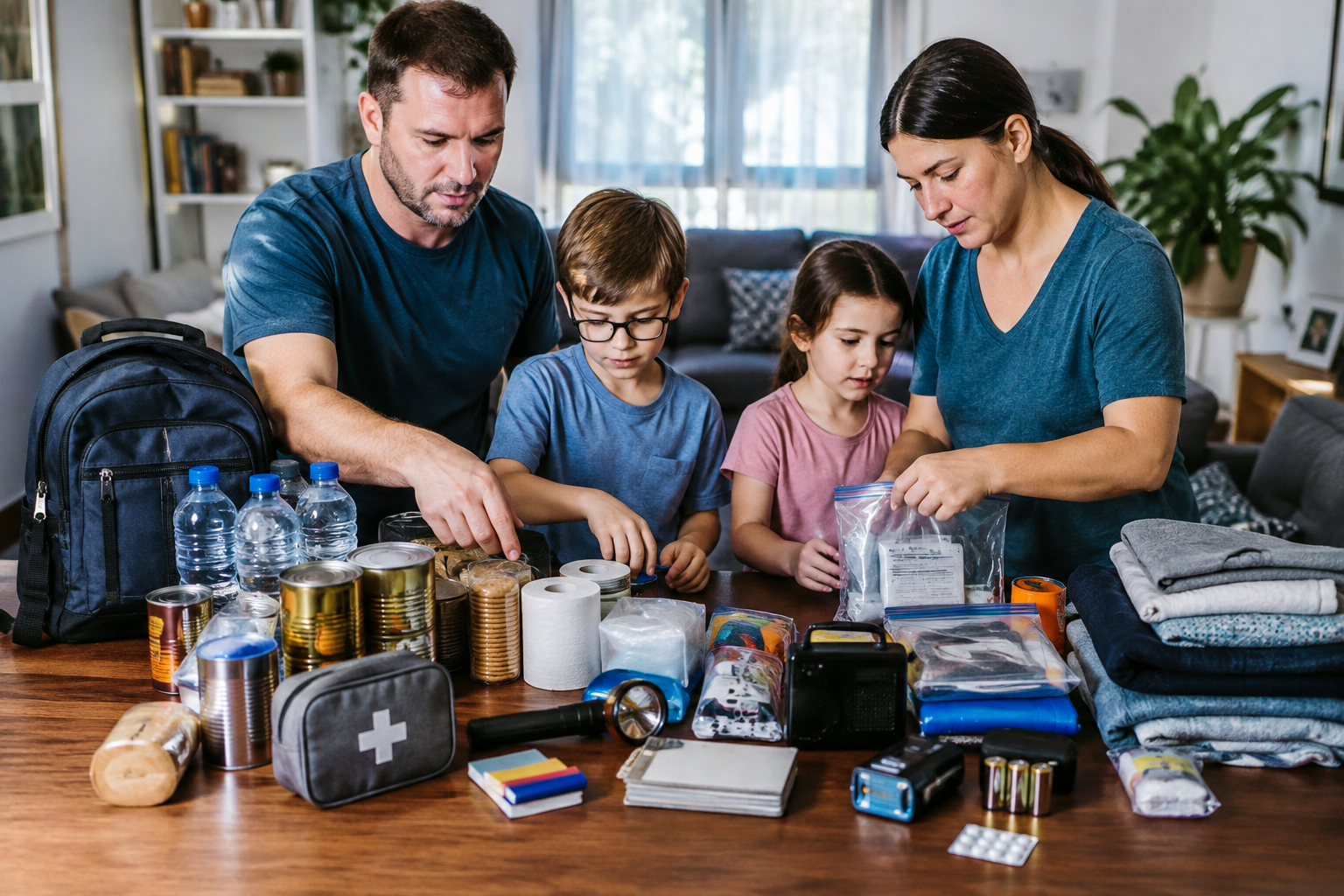
A family suburban survival kit is an organized home reserve of essential water, food, off-grid power, sanitation, and safety gear engineered to support household shelter-in-place needs during severe grid outages or regional emergencies. Suburban Survival Blog recommends building a stockpile that sustains your entire household independently for at least fourteen to thirty days without relying on public utility infrastructure.
Determining Supply Duration for Home Emergency Preparedness
Suburban emergency planning requires a different strategy than standard short-term wilderness survival or three-day bug-out bags. While federal guidelines provided by FEMA emergency supply standards recommend a baseline of seventy-two hours, severe municipal utility failures, ice storms, and supply chain disruptions often persist for weeks. A suburban household sheltering in place should aim for a minimum fourteen-day supply reserve, with a target goal of thirty days for long-term resilience.
Calculating required supply quantities requires counting every resident, including domestic pets, and factoring in specific medical or dietary requirements. In a suburban setting, bugging in allows families to store heavier, high-volume items that would be impossible to transport on foot. Expanding your kit beyond short-term survival means stocking scalable resources like bulk grains, large-capacity water containers, and continuous power generation tools.
Core Essentials for Your Suburban Survival Kit
Assembling a comprehensive suburban survival kit involves grouping gear into functional modules: hydration, nutrition, off-grid energy, home security, hygiene, and first aid. Standardizing your gear layout ensures family members can locate critical items immediately when a blackout or emergency occurs.
Water represents the single most critical asset in any home stockpile. Each family member requires a minimum of one gallon of potable water per day for drinking, food preparation, and basic hygiene. In addition to stored water, your kit must incorporate gravity-fed or pump-style water filters capable of processing non-potable surface water or rainwater harvesting collection tanks.
Nutrition planning relies on shelf-stable foods that require minimal preparation energy. Freeze-dried meals, canned meats, legumes, rice, and high-calorie ration bars form the core foundation of your pantry reserve. Pair these food items with dedicated emergency cooking stoves, such as butane burners or outdoor propane stoves, alongside portable power outage preparedness gear like rechargeable LED lanterns and battery banks.
Water Storage and Purification in a Suburban Environment
Securing clean drinking water during a prolonged utility interruption requires a multi-layered approach combining bulk storage, filtration, and chemical disinfection. According to official FEMA water storage guidance, municipal water tap systems can easily become contaminated or depressurized during flood events or grid failures, making home filtration vital.
Heavy-duty food-grade drums holding fifty-five gallons, stackable five-gallon water bricks, and specialized bathtub storage bladders provide reliable indoor liquid storage options. Keep water containers stored out of direct sunlight in cool basement areas to prevent algae growth. Treating stored tap water with plain household liquid bleach or dedicated water preservation treatments extends storage lifespan up to five years.
For long-term scenarios, rely on high-capacity micro-filtration systems equipped with activated carbon and ceramic filter elements. These systems remove biological pathogens, bacteria, microplastics, and heavy metals from raw water collected from nearby streams or rainwater runoff. Having secondary chemical treatment tablets or boiling capabilities ensures your water remains safe during extended boil-water advisories.
Off-Grid Power, Communication, and Lighting Gear
Electrical grid failure immediately degrades home safety, climate control, and communication. A robust suburban survival kit incorporates dual-fuel portable generators or solar power stations paired with high-efficiency photovoltaic panels to maintain essential appliances, medical devices, and communication gear.
Lighting needs are best satisfied through a combination of low-draw LED headlamps, multi-mode flashlights, and rechargeable hybrid solar lanterns. Staging lighting in key household access points, such as hallways, stairwells, and electrical breaker panels, prevents accidental injuries during sudden night-time blackouts. Stock extra lithium batteries, which offer long shelf lives and superior cold-weather stability compared to standard alkaline batteries.
Maintaining situational awareness requires reliable communication tools that operate independently of cellular towers. Multi-band weather radios with hand-crank charging options receive real-time weather alerts and emergency instructions. Pairing these receivers with family GMRS or FRS two-way handheld radios allows household members to coordinate during property security checks or local errands.
Home Sanitation, Hygiene, and Health Management
Sanitation breakdown represents a significant health risk when municipal sewer lines back up or water pressure drops completely. Managing household waste safely prevents disease transmission during extended bug-in scenarios.
A dedicated emergency sanitation setup includes five-gallon bucket toilets equipped with snap-on seats, heavy-duty waste bags, and absorbent wood shavings or cat litter. Storing commercial disinfectant sprays, heavy-duty nitrile gloves, hand sanitizers, and wet wipes ensures clean living conditions even when running tap water is unavailable.
Medical preparedness goes far beyond basic adhesive bandages. A complete home medical module contains trauma dressings, tourniquets, pressure bandages, antiseptic solutions, burn treatments, and a minimum thirty-day supply of critical prescription medications. When dealing with communicable illness or airborne contaminants, consider setting up a controlled space within the home by building an isolation room using heavy plastic sheeting and duct tape.
How to Store and Organize a Suburban Survival Kit
Proper gear organization determines how quickly your family can deploy equipment during an sudden emergency. Storing emergency gear haphazardly across closets creates friction and confusion when fast action is necessary.
Heavy-duty, waterproof plastic storage totes with locking lids provide the best protection against moisture, pests, and accidental damage. Color-coding totes by category—such as blue for water filtration, red for medical gear, and yellow for power and lighting—allows quick identification. Label every bin clearly with an external inventory list detailing item quantities and expiration dates.
Choose storage locations that remain climate-controlled, dry, and easily accessible. Basements, reinforced ground-floor utility closets, and secure garage shelving units work well. Keep heavier liquid storage bins on low ground levels to avoid structural strain, and ensure clear walkways lead directly to your emergency supplies.
Developing Essential Suburban Survival Skills and Routines
High-end emergency gear is only as effective as the knowledge of the person operating it. Mastering fundamental suburban survival skills ensures your family can manage unexpected home maintenance challenges and utility disruptions calmly.
Key household skills include knowing how to manually shut off main municipal water valves, gas lines, and electrical main breakers to protect home infrastructure during structural damage or gas leaks. Practice operating emergency stoves, testing solar charging equipment, and applying first aid dressings regularly during calm weekends.
Building self-reliance also involves developing alternative food production routines on your property. Methods such as container gardening, backyard composting, and growing your own food provide fresh micro-greens and vegetables that supplement dry pantry reserves during prolonged crisis events.
Putting Your Suburban Survival Guide into Practice
Treating your home readiness plan as an evolving project rather than a one-time purchase ensures long-term security. Implementing a practical suburban survival guide methodology involves routine maintenance, supply rotation, and family communication drills.
Conduct quarterly inventory audits to replace expired food items, check battery charge levels, and refresh stored drinking water. Involve all household members in realistic emergency walk-throughs so everyone understands their designated responsibilities during a blackout or severe weather warning.
By taking step-by-step, calm actions today, suburban families build resilience that protects their home and loved ones against any unexpected emergency. Suburban Survival Blog continues to provide practical, straightforward guidance to help everyday households achieve true peace of mind.