
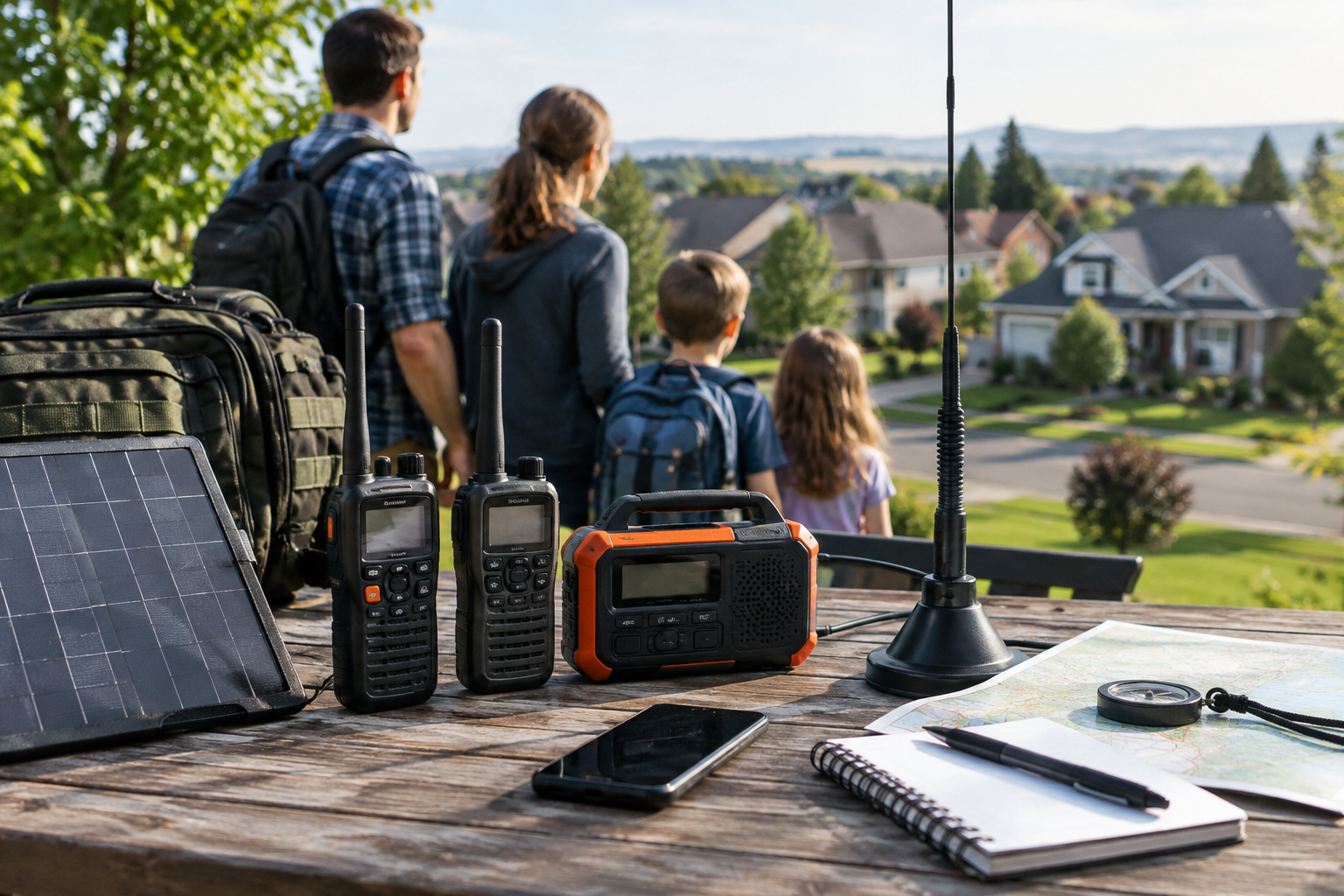
The best off-grid communication devices for suburban families include handheld mesh communicators, satellite messengers, GMRS handheld radios, and emergency broadcast receivers. These systems keep families in contact during severe grid failures, power outages, and cell tower disruptions without relying on cellular networks or traditional internet infrastructure.
Evaluating the Best Off-Grid Communication Devices for Emergency Use
During severe weather events, prolonged power outages, or regional infrastructure failures, standard cellular networks quickly become overwhelmed or completely non-functional. Suburban families often rely heavily on smartphones for daily check-ins, but when local towers go down, having alternative communication methods becomes essential. Building emergency preparedness plans requires incorporating reliable secondary systems that operate independently of central utilities.
When evaluating tools for family preparedness, families should consider coverage range, ease of operation, battery longevity, and equipment durability. Integrating practical suburban family preparedness tools ensures everyone can exchange critical location updates and safety checks.
Comparison of Primary Off-Grid Communication Categories
Different communication devices serve distinct operational needs during an emergency. The table below compares the primary categories of off-grid communicators available to suburban households.
OptionBest ForProsConsTypical EffortSatellite MessengersLong distance off grid communication across regionsGlobal reach, direct text messaging, location trackingRequires line-of-sight to sky, subscription fees applyLow technical setupHandheld Mesh RadiosLocal suburban neighborhood and family contact without feesNo recurring fees, automated mesh relaying, text clarityReduced range in dense tree canopy or heavy building structuresModerate initial Bluetooth pairingGMRS Two-Way RadiosImmediate tactical voice communication around neighborhoodsInexpensive, simple push-to-talk operation, clear voice channelsLine-of-sight range limits, shared public channelsVery low operational effortCB and Ham RadiosLonger range voice transmission and regional monitoringWide frequency coverage, robust community emergency networksSteeper learning curve, licensing required for ham broadcastingHigh technical effort
Satellite Messengers for Long Distance Off Grid Communication
Best for: Long distance off grid communication when family members are separated across different cities, states, or remote travel routes.
Satellite communicators bypass earth-based cell towers entirely by sending data directly to orbiting satellite constellations. This allows users to transmit text messages, GPS coordinates, and distress signals from virtually anywhere on Earth. For suburban families with members commuting long distances for work or school, satellite devices provide peace of mind during grid failures.
While satellite communicators are highly effective, they do require a clear view of the sky to establish contact with satellites. Heavy indoor coverage or dense building obstruction can delay message transmission. Additionally, satellite networks require ongoing satellite service contracts, making hardware expenses higher than standard radio alternatives.
Mesh Networking Radios for Local Neighborhood Connectivity
Best for: Decentralized neighborhood communication and text messaging within suburban communities during municipal power failures.
An off grid communication device utilizing mesh radio technology creates a localized, self-healing network. Instead of transmitting to a central tower, each mesh unit forwards encrypted text messages across nearby units until the message reaches the intended destination handset. This enables extended coverage across suburban neighborhoods even when physical obstructions exist.
Mesh radios usually pair with family smartphones via Bluetooth, offering a familiar text interface while sending raw signals over unlicensed radio frequencies. Since mesh networks operate without cellular towers or internet infrastructure, they incur no monthly subscription charges after the initial hardware purchase.
Off Grid Radio Communication with GMRS and Emergency Channels
Best for: Immediate short-range voice coordination among family members within a two to five mile suburban radius.
For direct voice communication, off grid radio communication using General Mobile Radio Service (GMRS) offers a simple and reliable choice. Operating on designated frequency bands, GMRS radios deliver higher power output than standard Family Radio Service (FRS) walkie-talkies. They allow family members to coordinate rally points, check on neighbors, or monitor weather broadcasts.
GMRS radios operate on a push-to-talk basis, making them easy for children and older family members to use without complex technical training. While basic FCC licensing is required for GMRS operation, no formal examination is needed, making it an accessible option for suburban households.
Understanding Costs and What Drives Equipment Expense
A common question among suburban preppers concerns how much reliable family off-grid communicators cost. Total investment varies significantly depending on the technology chosen, ongoing maintenance, and accessory requirements.
Entry-level two-way radios and simple mesh units represent one-time equipment purchases without recurring costs. In contrast, satellite messengers require both initial hardware purchases and monthly or annual satellite subscription plans to remain active. When budgeting, families should also account for auxiliary gear such as rechargeable power banks, small solar chargers, spare batteries, and protective storage cases.
Comparing Satellite Messengers vs Mesh Radios
Understanding the difference between satellite messengers and mesh radios helps families choose the right tool for their specific preparedness strategy. Many households find that a combination of both technologies provides the most complete coverage.
Satellite messengers rely on satellite constellations to provide nationwide coverage, making them ideal for long-distance family check-ins. However, they require clear sky views and ongoing subscription fees. Mesh radios, on the other hand, build local peer-to-peer networks that cost nothing to run, though their physical range is limited by terrain and distance. When comparing prepper setups, balancing local mesh capacity with long-distance satellite options ensures resilience across all emergency scenarios.
Developing a Family Off-Grid Communication Strategy
Equipped with the right devices, families must establish clear communication protocols before emergency situations occur. Having reliable hardware is only useful if every family member knows when and how to operate it.
Designate primary and secondary check-in times during a grid failure to conserve battery power. Establish clear primary channels or frequencies, pre-program contact lists into mesh or satellite systems, and store backup power sources alongside your equipment. Regularly testing your gear during family drills ensures that all devices remain fully operational and updated.