
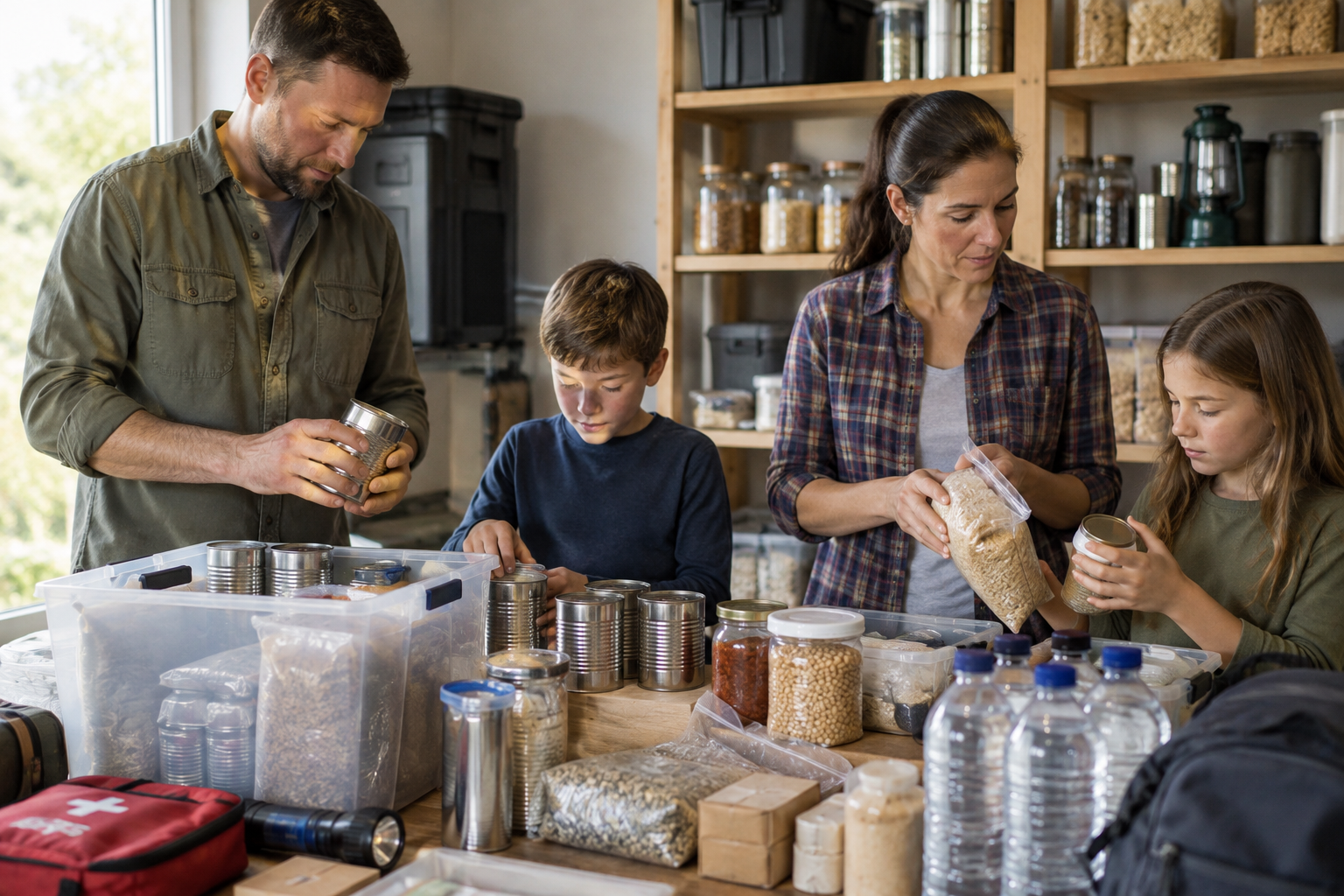
Selecting the right food for emergency preparedness requires balancing long-term shelf life, caloric density, nutritional balance, and simple preparation standard for suburban families sheltering in place. A resilient home survival supply combines freeze-dried pre-packaged meals, bulk staples, and high-calorie emergency ration bars, backed by off-grid cooking gear and adequate clean water storage.
| Option Category | Best For | Pros | Cons | Preparation & Effort |
|---|---|---|---|---|
| Pre-Packaged Freeze-Dried Buckets | Complete 30-day family bug-in stockpiles | 25-year shelf life, minimal cooking, tasty variety | Higher initial investment, requires hot water | Low: Add boiling water directly to pouch |
| Bulk Freeze-Dried Ingredients | Custom recipe building and long-term storage | Maximum versatility, single-ingredient purity, long shelf life | Requires culinary planning and separate spices | Moderate: Combine ingredients and cook manually |
| Emergency Calorie Ration Bars | Zero-prep immediate energy and bug-out kits | No water required, compact, withstands heat extremes | Dry texture, low variety, intended for short-term use | Zero: Ready to eat directly from packaging |
| Supermarket Pantry Rotation | Short-term grid outages and budget building | Familiar everyday foods, easy store purchasing | Shorter shelf life (1 to 5 years), high rotation upkeep | Standard household cooking methods |
Evaluating Long-Term Food for Emergency Preparedness Options
Building an effective residential supply of food for emergency preparedness begins with understanding the primary categories of shelf-stable provisions. Pre-packaged freeze-dried buckets represent one of the most accessible choices for suburban households. These kits contain individually sealed Mylar pouches of entrees, breakfasts, and side dishes stored inside durable high-density polyethylene (HDPE) buckets.
Bulk freeze-dried ingredients offer another option for families who prefer customized meal prep over pre-mixed entrees. By stocking individual containers of freeze-dried meats, vegetables, fruits, and dairy products, home preppers can tailor meals to specific dietary requirements or food allergies. This approach prevents dietary fatigue during an extended grid failure. However, managing single-ingredient storage requires holding a robust pantry of cooking oils, seasonings, and binders to turn raw components into satisfying meals.
For budget-conscious families starting from scratch, leveraging smart purchasing habits like prepper couponing allows you to stock up on standard canned goods, rice, beans, and pasta over time. Combining canned proteins with long-term freeze-dried items builds depth without straining your monthly household budget. Suburban Survival Blog recommends evaluating all options based on your family’s realistic cooking skills and space constraints.
Calculating Household Needs: Food for Emergency Preparedness for a Family
Determining how much food for emergency preparedness your household needs during a extended shelter-in-place scenario relies on raw caloric math rather than container volume. Official disaster readiness standards from FEMA Emergency Food Guidelines recommend planning for a minimum baseline intake of 2,000 calories per adult per day. High-stress emergency environments, cold winter indoor conditions, or physical labor can easily push daily requirements to 2,500 calories per person.
To calculate a 30-day bug-in stockpile for a family of four (two adults and two children), multiply daily individual needs by the total number of days:
- Two Adults: 2,000 calories x 2 people = 4,000 calories daily
- Two Children: 1,500 calories x 2 children = 3,000 calories daily
- Daily Household Requirement: 7,000 total calories
- 30-Day Emergency Supply: 7,000 calories x 30 days = 210,000 to 240,000 total calories
Many commercially marketed multi-day food buckets rely on low-calorie drinks, sweetened pudding mixes, or tiny serving sizes to inflate their overall meal counts. When evaluating commercial emergency food kits, always divide the total caloric content of the entire bucket by 2,000 to determine how many actual days of sustenance the kit provides for one adult.
Caloric Density and Shelf-Life Performance
Maximizing storage efficiency in suburban homes requires choosing items that offer exceptional caloric density relative to their physical footprint. Fats contain nine calories per gram, whereas carbohydrates and proteins contain four calories per gram. While pure fats like vegetable oils and lard are dense, they carry shorter shelf lives due to oxidation. Balancing carbohydrate stability with shelf-stable proteins creates a stable long-term reserve.
Proper packaging is critical to preserving shelf life. Oxygen, light, moisture, and temperature fluctuations accelerate food degradation. High-quality freeze-dried food for emergency preparedness is sealed inside heavy-duty 5-mil to 7-mil Mylar pouches packaged alongside food-safe oxygen absorbers. Storing these pouches inside rigid plastic buckets provides physical protection against pests, moisture intrusion, and flooding.
Temperature management significantly impacts shelf life performance. Official guidelines from the CDC Emergency Food and Water Guidelines state that emergency provisions stored at consistent cool temperatures around 55 to 60 degrees Fahrenheit maintain peak nutrition and flavor decades longer than items exposed to hot attics or unheated outdoor sheds.
Off-Grid Cooking and Food Preparation Supplies
Storing long-term food is only half of the bug-in equation; you must also possess the gear required to heat and cook your food when municipal power and natural gas utilities fail. Most freeze-dried meals require clean, boiling water to rehydrate properly. Attempting to consume unhydrated freeze-dried entrees dry can cause internal digestive discomfort and dehydrate your system faster.
Suburban preppers should establish a multi-layered cooking strategy consisting of diverse heat sources:
- Portable Butane or Propane Stoves: Single-burner tabletop stoves operate safely indoors provided room ventilation is maintained. They offer instant, controllable heat for boiling water quickly.
- Dual-Fuel Camp Stoves: Heavy-duty liquid fuel or Coleman gas stoves provide dependable heat outdoors on patios or back decks during severe weather outages.
- Solar Ovens: Photothermal solar cookers require no fuel, making them an excellent backup for sunny daytime cooking during prolonged grid failures.
- Solid Fuel and Biomass Stoves: Compact wood-burning twig stoves or hexamine tablet burners provide zero-gas emergency heating alternatives using backyard debris.
Never operate open-flame outdoor charcoal grills, camp stoves, or unvented gasoline burners inside closed living spaces due to carbon monoxide hazards. Always keep battery-operated carbon monoxide detectors installed near cooking areas during emergencies.
Integrating Water for Emergency Preparedness with Food Storage
A comprehensive emergency plan must pair long-term food supplies with adequate water for emergency preparedness. Freeze-dried and dehydrated foods contain virtually zero moisture, meaning your body relies entirely on external water intake to digest these meals. Rehydrating a standard freeze-dried family meal bucket requires approximately 1 to 2 cups of boiling water per serving, expanding your total daily water footprint.
Plan for a baseline water storage reserve of at least one gallon per person per day for drinking and sanitation, plus an additional half-gallon per person per day specifically dedicated to freeze-dried food rehydration and basic dish cleanup. For a family of four during a 30-day bug-in, this requires storing approximately 180 gallons of potable water. Combining rigid home storage containers with gravity-fed water filters ensures your family maintains safe water quality throughout an extended emergency.
Building Essential Supplies for Disaster Preparedness
Expanding your home pantry into a complete shelter-in-place survival setup requires assembling complementary supplies for disaster preparedness. Having hundreds of thousands of calories stored is ineffective if you lack the simple hand tools necessary to access or cook your provisions during an infrastructure collapse.
Essential non-food pantry supplies include:
- Heavy-duty manual can openers (keep at least two redundant stainless steel units on hand)
- Cast iron cookware and stainless steel pots capable of handling open flame heat
- Silicone potholders, long-handled cooking utensils, and heavy aluminum foil
- Sanitation supplies including biodegradable dish soap, scrub sponges, and trash bags
- Manual grain mills if storing whole wheat berries, dent corn, or dry beans
Organizing your stockpiles on heavy-duty wire shelving units inside a cool, dark basement closet or dedicated shelter space keeps provisions accessible. Applying basic first-in, first-out (FIFO) rotation strategies to your short-term pantry goods ensures your household maintains fresh supplies without wasting money or food. Explore more practical advice at Suburban Survival Blog to refine your family’s home resilience strategy step by step.