
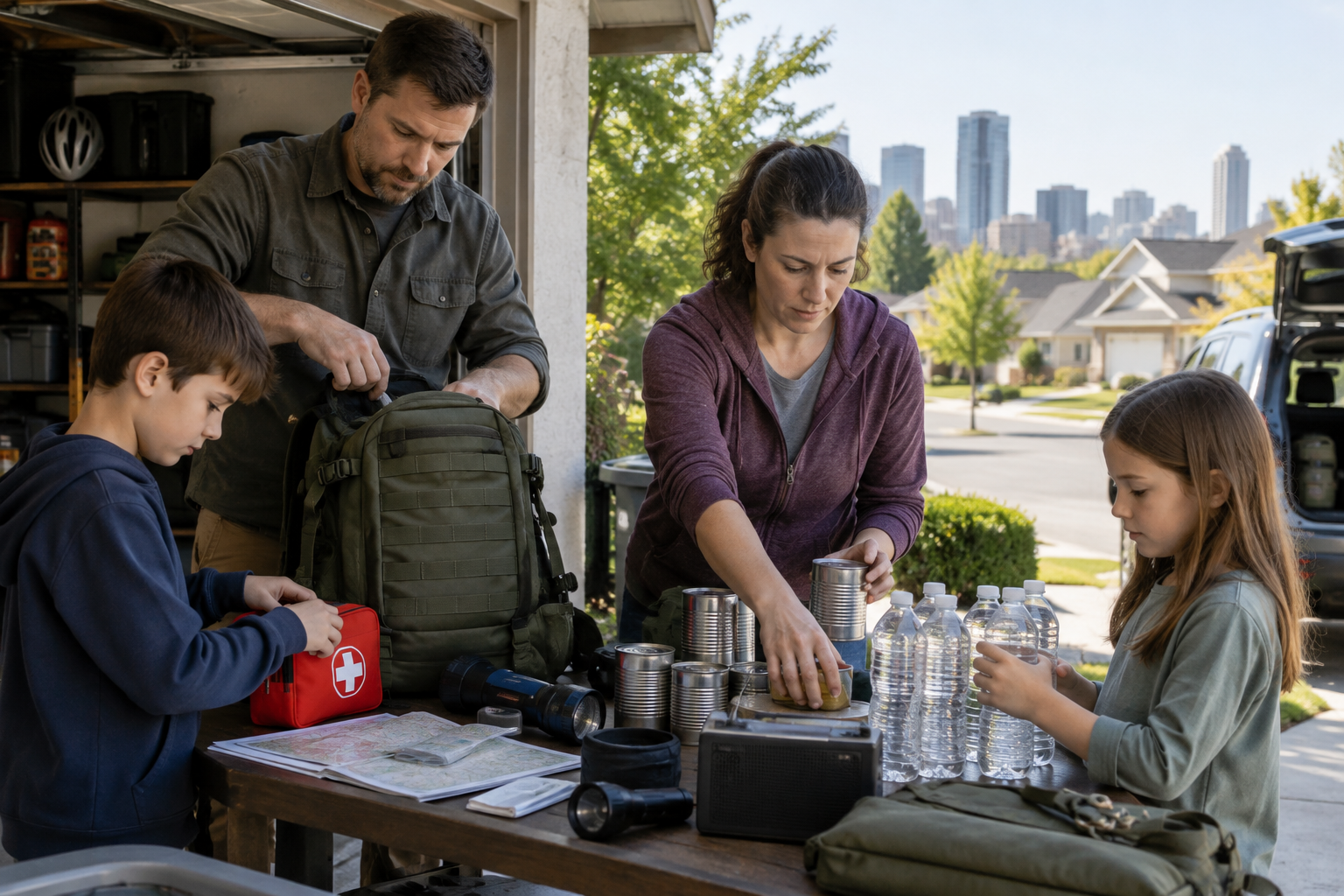
Urban survival training provides individuals and families with structured methods to navigate infrastructure failures, emergency evacuations, grid collapse, and sudden civil disruptions in high-density environments. Core tactical skillsets focus on situational awareness, route planning, emergency resource management, and conflict avoidance, allowing suburban and city households to remain safe without relying on municipal utilities.
Fundamentals of Urban Survival Training for Suburban Families
Urban environments present unique challenges during emergencies, including dense populations, concrete barriers, complex utility grids, and vertical structures. Standard survival tactics designed for wilderness settings often fail in city environments because finding natural shelter or hunting for food is unfeasible. Suburban Survival Blog emphasizes that urban readiness requires adapting mindset and skills to navigate manmade obstacles, infrastructure blackouts, and localized disruptions.
Structured training focuses on risk mitigation rather than reactive panic. Families learn to analyze their daily transit paths, identify potential hazards such as compromised bridges or overwhelmed transit hubs, and establish alternative communication protocols. Developing a foundational mindset ensures that household members can remain composed and make sound decisions when municipal services, cellular networks, or power grids fail unexpectedly.
Essential Skills Taught in Urban Survival Training Programs
Comprehensive urban survival training programs teach practical skillsets designed to overcome civil and utility disruptions. Key instructions cover offline navigation, building egress, water harvesting from structural plumbing, emergency communications, and basic trauma response. Training courses train students to read paper topographic and street maps, identify secondary exit routes from high-rise structures, and use basic tools to shut off gas lines or bypass locked egress gates during building evacuations.
Participants also learn how to evaluate structural stability following earthquakes or severe storms. Another major component is resource management, which includes purifying water collected from non-traditional urban sources and maintaining a compact kit for city travel. Practicing these tactics helps individuals build confidence, ensuring they can protect their family without relying on immediate external emergency response. When moving through urban corridors daily, carrying a well-planned travel edc ensures essential emergency tools are always within reach.
Practical Situational Awareness Techniques for City Travel
Situational awareness is the primary line of defense when traveling through congested urban centers. Effective awareness techniques involve continuously observing environmental conditions, recognizing baseline patterns of human behavior, and detecting subtle anomalies before threats escalate. Urban commuters should practice scanning crowds, keeping head movement fluid, and avoiding distractions such as mobile device screens or headphones while walking or waiting for public transit.
Identifying physical exits and choke points is another vital aspect of city awareness. When entering any building, parking garage, or transit facility, locate at least two emergency exits immediately. Maintain adequate physical spacing from dense groups, stand near structural supports rather than open corridors, and keep exit pathways clear. According to published disaster guidance from Ready.gov emergency planning resources, establishing early communication and meeting locations is critical when navigating unexpected urban hazards.
Building an Effective Urban Survival List for Family Preparedness
Creating a customized urban survival list allows families to organize gear and emergency supplies systematically based on urban hazards. Unlike wilderness gear lists, an urban checklist prioritizes compact multi-use items that address utility loss, structural navigation, and personal safety. Key hardware items include a multi-tool, heavy-duty work gloves, compact flashlights, door stop wedges for securing temporary quarters, and a silcock key for accessing commercial building water spigots.
In addition to physical equipment, an effective checklist includes critical documentation and communication assets. Keep physical paper maps of your metro area, lists of contact numbers, emergency cash, and personal identification sealed in waterproof containers. Regularly reviewing and updating your inventory ensures that family bug-out bags and vehicle kits remain fully stocked and functional for short-notice evacuations.
Practicing Urban Survival Training at Home Without Expensive Courses
Everyday families do not need to spend thousands of dollars on commercial instruction to develop high-level urban preparedness skills. Household members can practice core drills right in their own neighborhood. Simple exercises include conducting family blackout drills where power switches are intentionally turned off for a weekend, forcing everyone to rely on emergency lighting, backup cooking stoves, and stored water reserves.
Physical conditioning and routine route drills also play a massive role in family readiness. Practice walking primary and secondary evacuation paths on foot with loaded backpacks to build physical stamina and test gear functionality. Integrating continuous survival fitness into daily routines ensures that parents and children have the endurance needed to walk miles through urban terrain if public transportation and roads become gridlocked.
Learning Urban Preparedness from an Urban Survival Book
Self-directed learning through quality reference literature provides an excellent foundation for practical preparedness. Reading a well-crafted urban survival book helps families study real-world case studies of urban disasters, blackouts, and grid disruptions. These books break down complex concepts into step-by-step guides covering home fortification, water purification techniques, sanitation protocols, and neighborhood coordination.
Studying educational guides allows households to learn from past emergencies without experiencing severe hardship firsthand. Combining literature study with insights from trusted online communities and recommended prepper blogs helps families refine their emergency plans continually as new threats and technologies emerge.
Navigating Urban Power Outages and Structural Grid Failures
Extended power outages in high-density urban areas create unique operational challenges, including dark stairwells, non-functioning elevators, deactivated security systems, and municipal water supply loss. Families must prepare for these scenarios by establishing layered lighting systems, alternative cooking methods, and manual waste management solutions. Following public safety guidance outlined by Ready.gov power outage guidelines, households should keep emergency flashlights accessible in every room and avoid using open candles due to indoor fire risks.
Navigating structural grid failures also requires securing your living space against cold or extreme heat. Stashing thermal blankets, blackout window coverings, and battery-powered fans allows families to maintain safe indoor temperatures while bugging in. By combining practical skills, proper tools, and regular practice drills, suburban and city families can navigate severe urban emergencies with calm confidence.