
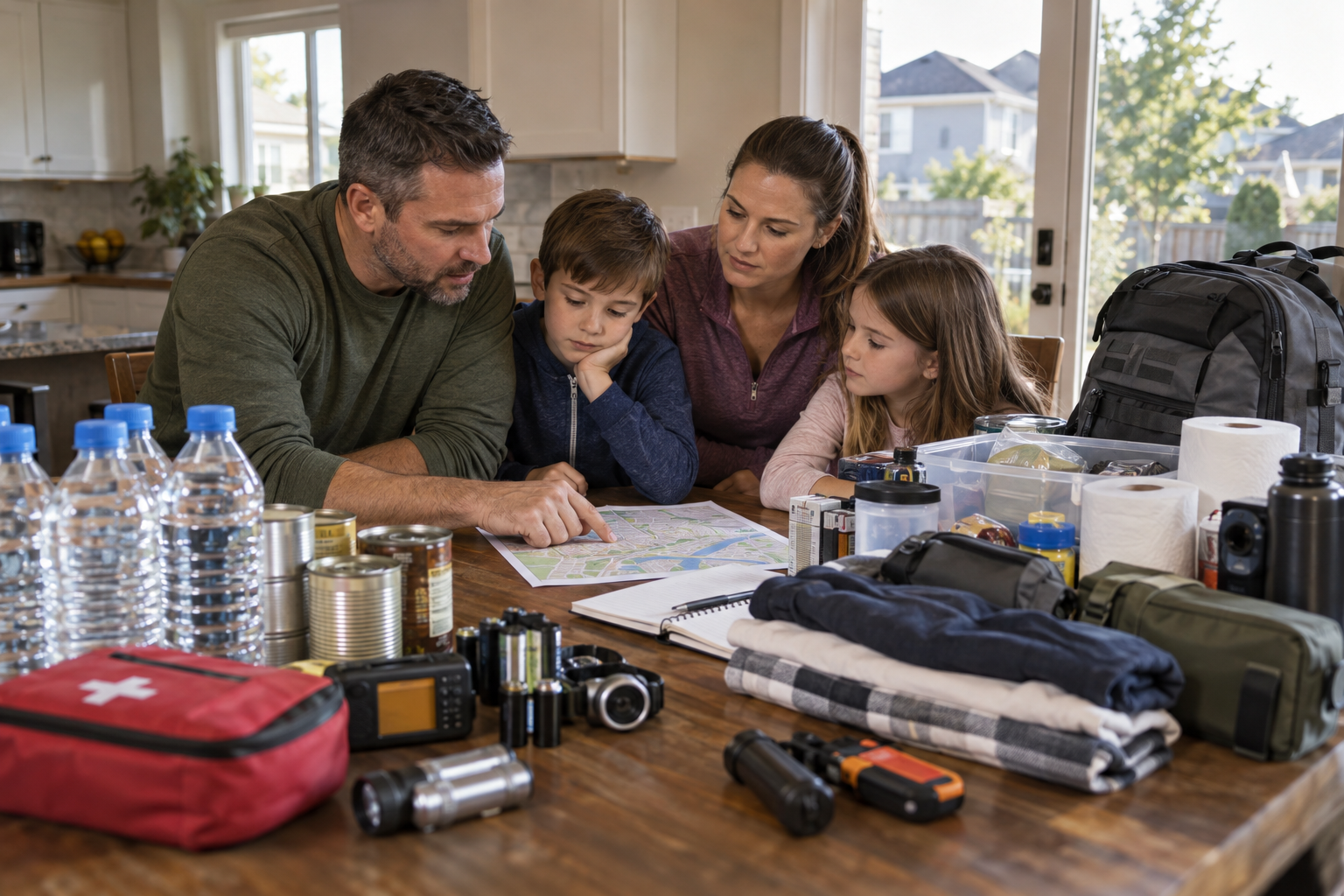
For suburban preppers, preparing for an extended shelter-in-place scenario requires balancing home security, short-term utility outages, limited yard space, and neighborhood regulations. Successful bug in preparedness relies on securing clean water, managing household waste, organizing food reserves, establishing multi-layered physical home defenses, and maintaining discrete daily routines without alarming nearby neighbors.
Essential Supplies for Suburban Preppers Bugging In
Suburban families facing unexpected grid disruptions or severe storms often find that sheltering in place is far safer than evacuating onto clogged highways. While rural property owners may have acres to spread out gear, suburban households must optimize every square foot of interior space. Emergency water storage remains the single most critical priority. Standard guidelines from federal emergency agencies recommend storing at least one gallon of clean water per person per day for drinking and sanitation. To review official federal storage guidelines, consult the FEMA Ready.gov shelter guidance on home emergency management.
Alongside water, building a robust emergency food supply requires selecting shelf-stable items that require minimal fuel or liquid to prepare. Focus on dense protein sources, canned goods, rice, beans, and freeze-dried meals that your family already enjoys. Rotating your food inventory every six months prevents spoilage and avoids financial waste. Additionally, ensuring reliable power during outages requires modular solutions like portable power stations, rechargeable LED lanterns, and small folding solar panels. Families should audit their supplies regularly to verify that batteries are charged and medical kits are fully stocked.
Properly storing these items inside a typical suburban home involves utilizing under-bed storage containers, hall closet shelving, and reinforced basement racks. Keeping your supplies organized by category allows family members to locate critical emergency gear quickly during high-stress situations without creating unnecessary household clutter.
Navigating HOA Rules and Neighborhood Density
One of the primary challenges unique to suburban environments is dealing with Homeowners Associations (HOAs) and close proximity to neighbors. Visible emergency preparations, such as tall security fences, large exterior rain barrels, or loud fuel-powered generators, can draw unwanted attention or violate community bylaws during normal times. Discretion is essential for maintaining privacy and peaceful community relations.
Instead of obvious exterior modifications, focus on low-profile upgrades. Install high-grade interior window locks, reinforced door strike plates with three-inch screws, and heavy blackout curtains. Blackout shades prevent light leakage at night, keeping your household from becoming a focal point during neighborhood-wide blackout events. For water storage, high-capacity indoor bladders or stackable water bricks fit easily into spare closets without changing the exterior aesthetic of your home.
Although growing food in high-density areas may be restricted by strict HOA covenants, subtle landscaping choices can yield fresh produce. Incorporate edible plants, berry bushes, and fruit trees directly into existing garden beds rather than planting structured agricultural rows. This approach maintains curb appeal while augmenting your emergency food supply.
Security and Sanitation Strategies for Suburban Preppers
Maintaining security and hygiene in a dense neighborhood during an extended crisis requires proactive planning and clear household protocols. Suburban homes often present multiple entry points, including ground-floor windows, sliding glass doors, and attached garages. Hardening these access points creates a strong deterrent against opportunistic intrusion.
Start by reinforcing door frames with heavy-duty metal strike plates and installing shatter-resistant security film on exposed window glass. Motion-activated solar perimeter lighting provides effective illumination without relying on grid power. Establishing basic situational awareness routines, such as keeping doors deadbolted and vehicle interiors clear of valuables, forms the first line of home defense. At Suburban Survival Blog, we emphasize that home security relies primarily on layered prevention and physical deterrence rather than complex tactical setups.
Sanitation is equally critical when municipal water or sewage systems stop working. Without functioning plumbing, raw sewage backup creates severe health hazards inside a home. Disconnect or isolate main sewage valves if municipal lines fail, and establish alternative toilet facilities immediately. Maintaining strict hygiene standards following established CDC emergency water standards helps prevent waterborne diseases and gastrointestinal illness. A simple dry bucket system utilizing double-lined heavy contractor bags, absorbent sawdust or cat litter, and commercial disinfectant powder provides a reliable short-term sanitation solution.
Designating Safe Spaces and Quarantine Zones
In certain shelter-in-place scenarios, such as hazardous material spills or biological threats, isolating specific areas of the home becomes necessary. Creating an internal safe room provides a localized sanctuary where clean air and warmth can be maintained efficiently during environmental hazard events.
Choose an interior room on an upper level for chemical threats, or a basement area for severe weather, ideally one with minimal exterior windows and quick access to bathroom facilities. Stock this space with sealed emergency kits, basic medical supplies, battery-powered communications, and short-term rations. If medical isolation is required for an ill family member, building an isolation room using plastic sheeting, painter’s tape, and portable HEPA air filtration units prevents airborne contaminants from circulating throughout the home.
Regularly reviewing family emergency plans ensures every household member knows which room to report to when warning sirens sound. Practicing entry and sealing procedures once or twice a year reduces panic and improves response speed during actual emergency events.
Off-Grid Communication and Community Awareness
When cellular networks become overloaded or local power towers fail, remaining informed about local emergency broadcasts is vital. Suburban households should maintain multiple redundant communication channels to track weather updates, civil guidance, and community status reports.
A hand-crank or solar NOAA weather radio provides continuous emergency audio broadcasts without requiring external grid electricity. For local household or neighborhood coordination, small GMRS or FMRS handheld radios offer reliable short-range voice communication. Keeping backup power banks and localized radio frequency lists stored together ensures seamless operation when primary phone lines drop offline.
Building quiet, positive relationships with trusted immediate neighbors before an emergency occurs creates mutual safety benefits. Knowing which neighbors have specialized skills, medical training, or emergency equipment allows for natural community cooperation during localized severe weather recoveries without broadcasting your entire inventory.
Common Mistakes Suburban Preppers Should Avoid
Even well-intentioned families can make tactical errors when preparing for long-term utility outages. Recognizing common pitfalls helps streamline your family planning and ensures resources are used effectively.
One common mistake is failing to test equipment under realistic conditions. Owning complex stoves, portable generators, or water purifiers is useless if nobody in the family knows how to operate them in total darkness. Conduct periodic power-down drills where the main breaker is switched off for 24 hours, allowing your family to identify gaps in your setup before a real crisis occurs. Regularly testing your power outage preparedness gear reveals minor issues like dead batteries or missing fuel adapters early.
Another frequent error is neglecting physical wellness and routine practical skills. Having shelves stocked with gear cannot compensate for poor physical stamina when moving heavy water containers or clearing storm debris. Maintaining active fitness routines and gathering practical self-reliance knowledge remain core principles of the Suburban Survival Blog philosophy.
Finally, avoid broadcasting your emergency preparedness efforts on public social media platforms. Maintaining privacy about your stockpiles protects your family from becoming an emergency relief hub for unprepared acquaintances when local retail shelves run empty during unexpected crises.