
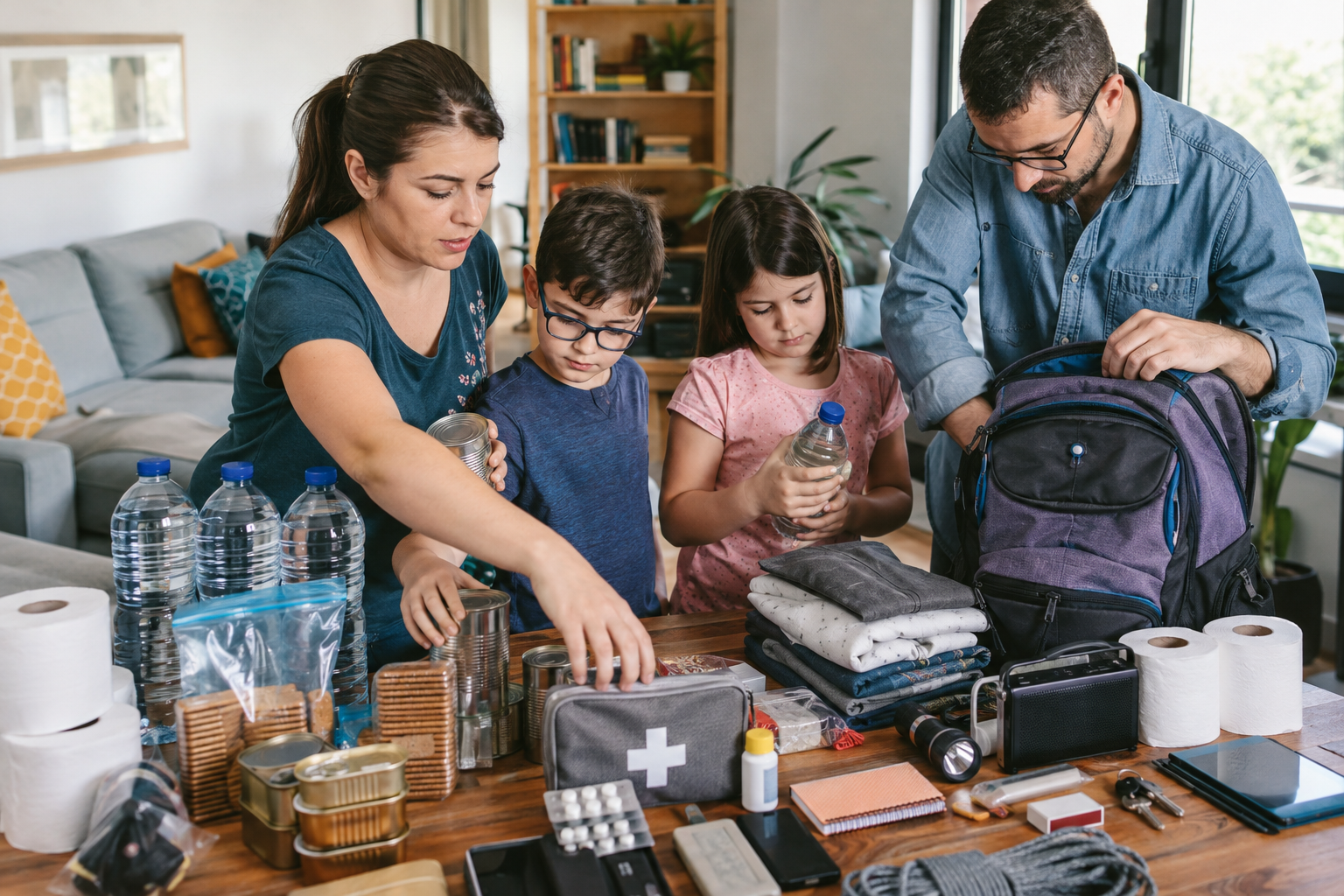
Building an emergency kit for earthquake preparedness requires staging potable water, non-perishable food, off-grid communication devices, sanitation supplies, and heavy-duty emergency gear to support family shelter-in-place needs for at least three to seven days. Suburban Survival Blog evaluates modular home preparedness configurations to help families prepare for regional infrastructure outages following seismic events.
Understanding the Core Components of an Emergency Kit for Earthquake Preparedness
An effective emergency kit for earthquake preparedness must account for severe post-earthquake realities, including prolonged municipal power failures, severed natural gas lines, fractured water mains, and disrupted transportation routes. Unlike standard storm prep where families often receive advance warning, seismic activity occurs without notice. Therefore, suburban households must keep supplies pre-staged in accessible, impact-resistant containers that remain usable even if structural damage occurs.
Core categories of emergency preparedness supplies include critical hydration systems, high-calorie food stores, medical first aid modules, heavy-duty personal protective equipment (PPE), sanitation systems, and independent power or illumination tools. Staging these supplies into coordinated sub-kits ensures family members can immediately locate vital resources during power failures or nighttime seismic events.
When planning your layout, check local risk levels using resources like an earthquake map to gauge potential fault line hazards in your region. Tailoring your gear density to your specific geographic vulnerability ensures your household allocates resources where they are needed most.
Water and Food Supplies Required for a Family of Four
Hydration and nutrition form the baseline of any emergency preparedness home kit. For a family of four, water storage planning requires calculating a strict minimum of one gallon per person per day for drinking and basic hygiene. For a standard seven-day shelter-in-place duration, a family of four requires at least 28 gallons of stored potable water. During hot seasons or in households with infants or nursing mothers, increasing this baseline to 1.5 gallons per person daily is strongly recommended.
Food storage should focus on shelf-stable, high-calorie emergency rations that require minimal or no heat and water to prepare. Excellent choices include freeze-dried emergency meals, commercial meal bars, canned proteins like tuna and chicken, peanut butter, and vacuum-sealed dry fruit. Ensure your food supply includes a manual, heavy-duty can opener and non-potable water washing gear to keep eating utensils clean without depleting drinking water reserves.
According to federal safety recommendations published on Ready.gov earthquake guidance, households should maintain at least a three-day supply of non-perishable food and water for immediate survival, though expanding to a two-week reserve provides superior security against long-term supply chain disruptions.
Comparing Kit Configurations for Suburban Households
Choosing the right framework for your family depends on budget, house size, DIY willingness, and specific family mobility needs. Below is a structured comparison of the primary approaches to assembling an emergency kit for earthquake preparedness.
| Option | Best For | Pros | Cons | Typical Effort |
|---|---|---|---|---|
| Pre-Assembled Commercial Kit | Busy families wanting immediate turnkey coverage | Quick deployment, organized packaging, pre-measured rations | Generic gear quality, lacks custom medication or tailored clothing | Low initial setup |
| Custom Modular Family Kit | Families with specific medical, dietary, or pet needs | High-quality selected gear, tailored supplies, easy component updates | Requires individual purchasing and careful organization | Moderate initial setup |
| DIY Staged Home Supply System | Large suburban homes with dedicated storage space | Maximum supply volume, lowest cost per gallon/calorie, deep redundancy | Takes up significant garage or storage space, harder to move quickly | High initial setup |
Pre-Assembled Commercial Kits: Immediate Turnkey Coverage
Pre-assembled commercial kits provide an out-of-the-box starting baseline. These setups usually arrive in a single heavy-duty backpack or rolling tote containing standard emergency rations, basic water pouches, a simple first aid kit, and emergency foil blankets. While commercial kits offer fast peace of mind, they frequently contain lightweight tools and limited medication space, requiring supplemental customization before they are truly complete.
Custom Modular Family Kits: Tailored suburban Resilience
A custom modular family kit represents the ideal middle ground for most suburban preppers. By using color-coded dry bags or heavy-duty totes, families assemble specialized modules for first aid, lighting, water filtration, hygiene, and communications. This approach allows you to integrate prescription medications, specialty dietary items, child care items, and pet supplies directly into your primary stash.
DIY Staged Home Supply Systems: High-Volume Shelter-in-Place
For families intending to shelter in place long-term, a staged home supply system utilizes heavy plastic storage trunks placed in strategic locations around the home, such as the garage, basement, or sturdy exterior shed. This configuration prioritizes deep inventory over immediate portability, housing large water barrels, bulk freeze-dried food buckets, propane cooking gear, and heavy tools.
Difference Between a Bug-Out Bag and an Emergency Preparedness Home Kit
Understanding the operational distinction between a mobile bug-out bag and a stationary emergency preparedness home kit is essential for effective earthquake planning. A bug-out bag is designed for rapid evacuation when structural collapse, gas leaks, or wildfire threats force you to leave your residence immediately. It emphasizes portability, lightweight gear, individual survival items, and a 72-hour supply limit packed into a wearable backpack.
In contrast, an emergency preparedness home kit is optimized for bugging in. Following major seismic events, structural damage to bridges and roadways often makes vehicle travel impossible. A home stay-put kit provides deep supply reserves, robust sanitation systems, alternative cooking appliances, and larger solar power generators that allow your family to comfortably manage grid disruptions for weeks without relying on municipal utility restoration.
Essential Emergency Preparedness Supplies for Post-Earthquake Utility Outages
Earthquakes regularly disrupt municipal gas, water, and electrical infrastructure. To manage these outages safely, your kit must contain specific tools engineered for utility isolation and off-grid maintenance:
- Gas Shut-Off Wrench: A non-sparking tool kept near your main natural gas meter to shut off gas lines immediately if you smell leaks post-quake.
- Heavy Leather Work Gloves & Safety Goggles: Essential personal protective equipment for clearing broken glass, debris, and fallen drywall around your home.
- Off-Grid Illumination: Headlamps, battery-powered lanterns, and hybrid solar lights to keep hands free during nighttime inspections.
- Sanitation Buckets & Biohazard Bags: Portable toilet seats that snap onto five-gallon buckets, accompanied by chemical deodorizers and heavy trash bags when sewer lines are compromised.
- Emergency Communications: NOAA weather radios and handheld GMRS or FMRS radios to receive local emergency broadcasts when cellular networks fail.
For families concerned about biohazards, secondary structural hazards, or post-event contamination, creating a designated clean zone or building an isolation room inside the home offers an extra layer of family security while municipal services recover.
Building a Custom Emergency Kit for Earthquake Preparedness Step by Step
To construct a reliable emergency kit for earthquake preparedness without feeling overwhelmed, break the project into clear, practical steps:
- Audit Family Needs: Calculate exact water and calorie requirements, list required prescription medications, and identify unique items needed for infants, elderly relatives, or pets.
- Select Container Hardware: Obtain waterproof, stackable plastic totes with latching lids for home storage, along with sturdy 30-liter backpacks for individual grab-and-go mobility.
- Stage Hydration and Filtration: Combine commercially sealed bottled water or heavy-duty storage barrels with portable gravity water filters and purification tablets.
- Pack First Aid and Trauma Supplies: Include pressure dressings, tourniquets, burn gel, splints, antiseptic wipes, and a multi-week reserve of essential daily medications.
- Add Heavy Tools and Utility Gear: Pack duct tape, pry bars, multi-tools, tarps, paracord, and sturdy work boots next to your primary kit container.
Review data from scientific organizations like the USGS Earthquake Hazards Program to stay informed on regional seismic risks and structural safety standards for your neighborhood.
Maintaining and Staging Your Kit for Immediate Access
An emergency kit is only as good as its maintenance routine. Suburban families should schedule semi-annual maintenance checks, coinciding with daylight saving time changes, to inspect supply integrity. Rotate stored water, inspect canned food expiration dates, replace spent batteries, and update seasonal clothing items stored in evacuation packs.
Store your primary home kit in a cool, accessible location that remains reachable even if interior doors jam during structural settling. Ground floor closets, reinforced garage corners, or dedicated outdoor storage sheds are ideal locations. Ensure every household member knows where the kit is kept and understands how to operate primary emergency tools.
At suburban survival blog, our goal is to help families build sensible, practical preparedness habits without panic. Taking step-by-step action today ensures your household remains safe, calm, and fully resourced when the next major earthquake strikes.